
An accessory dwelling unit (ADU) is a smaller, independent home on the same lot as your house, with its own kitchen, bath, and entrance. In Cambridge, that usually takes one of a few forms: a basement or attic conversion, a garage conversion, an addition off the main house, or a small detached unit in the rear yard.
Cambridge is dense and built out, with tight lots, historic districts, and a mix of Victorian two- and three-families near Harvard, MIT, and the squares. On most parcels here, an interior or garage conversion is more practical than a large detached build, and every option has to work within the city's zoning and lot limits.
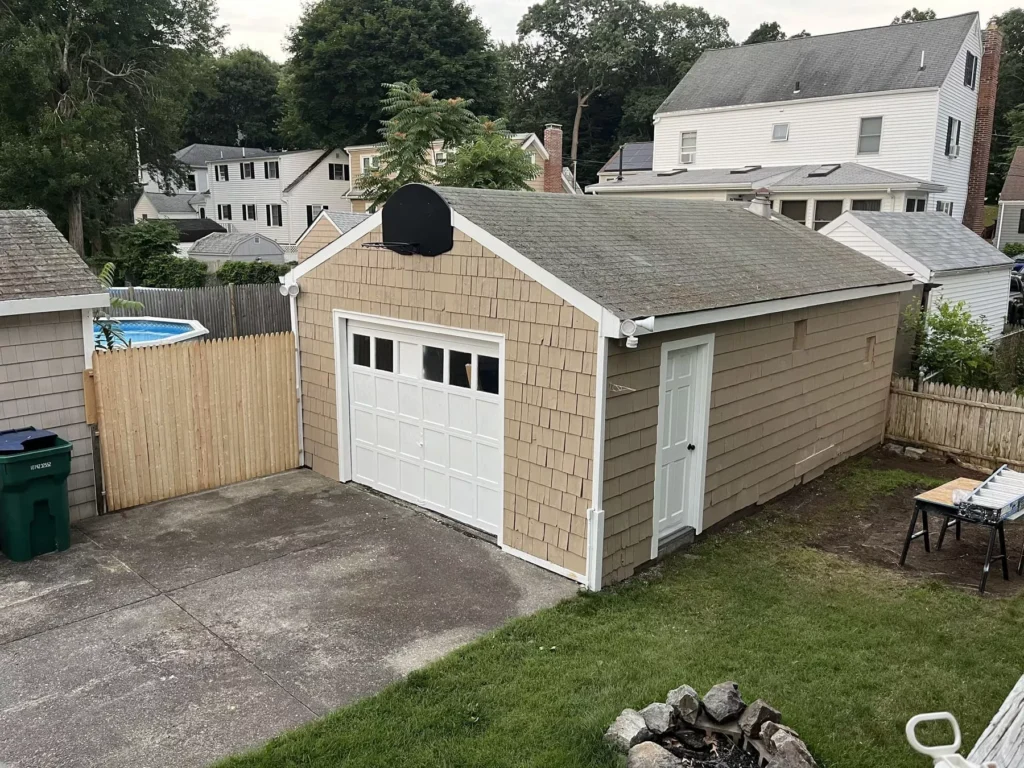
Homeowners in Cambridge typically build an ADU to:
House family close by, whether an aging parent or an adult child, with independent living space.
Add long-term rental income in one of the strongest rental markets in the state.
Create flexible space now that can convert to a caregiver or in-law suite later.
Add lasting value to a property on a limited urban lot without buying more land.
An ADU is the right project when you need a second, self-contained living space and want it done legally, permitted, and built to code.
The process starts with a free in-home consultation and a feasibility review of your lot: zoning, lot coverage, utility connections, and which ADU type fits best. You get an itemized written estimate and scope that includes permit handling.
After you approve the design, JRH files for a building permit through the City of Cambridge Inspectional Services Department, and licensed electrical and plumbing trades pull their own permits. We build with inspections at each required stage and finish with a final walkthrough and city sign-off. Timelines depend on whether the ADU is a conversion or a detached build.
Under the Massachusetts Affordable Homes Act, as of February 2025 a single ADU of up to 900 square feet is allowed by right in single-family zoning districts statewide, without a special permit. You can read the state summary of the statewide by-right ADU law for the details. Cambridge zoning also allows accessory units in many districts, so the first step is confirming what your specific parcel permits.
By right does not mean without a permit. Any ADU in Cambridge still needs a building permit through the Inspectional Services Department (ISD), plus separate electrical and plumbing permits pulled by licensed trades. Cambridge ISD is located at 831 Massachusetts Avenue and can be reached at (617) 349-6100, with applications filed through the city's online permitting portal.
ADU costs vary widely by type. A basement or garage conversion in Cambridge commonly starts around $60,000, while a detached backyard unit can run $150,000 or more, roughly $150 to $300 per square foot depending on finishes and utility connections (national cost data, 2025). On tight Cambridge lots, conversions are often the most cost-effective path.
Because an ADU is new, well-insulated living space, Mass Save offers rebates for insulation, heat pumps, and efficient equipment installed during construction.
As a registered contractor, JRH gives you coverage under the state's Home Improvement Contractor program and Guaranty Fund, plus a free, itemized in-home estimate.
JRH builds ADUs throughout Cambridge, including Harvard Square, Central Square, Kendall Square, Porter Square, Cambridgeport, Mid-Cambridge, East Cambridge, North Cambridge, Riverside, Agassiz, The Port, Wellington-Harrington, and West Cambridge. Cambridge is in Middlesex County and covers ZIP codes 02138, 02139, 02140, 02141, and 02142, where tight lots and historic districts make interior and garage conversions the most common ADU path.
JRH Constructions is a licensed Massachusetts home improvement contractor (MA HIC #204867), registered and active, and fully insured. JRH Constructions, MA HIC #204867, Lynn, MA. Serving Cambridge and Middlesex County. Call (781) 520-1982 for a free in-home estimate.
Because JRH is a registered Massachusetts Home Improvement Contractor (#204867), your Cambridge ADU is designed to the state by-right law and city zoning, permitted through the City of Cambridge, and inspected at each stage, with the state's HIC consumer-protection framework behind it.